Choosing between curtains and Roman blinds is one of the most important decisions when dressing your windows. Both options are stylish, practical, and highly effective, yet they create very different looks and perform in distinct ways. Understanding their key differences- as well as what they have in common- will help you select the right solution for your home, lifestyle, and aesthetic.
Curtains: Softness, Scale, and Versatility
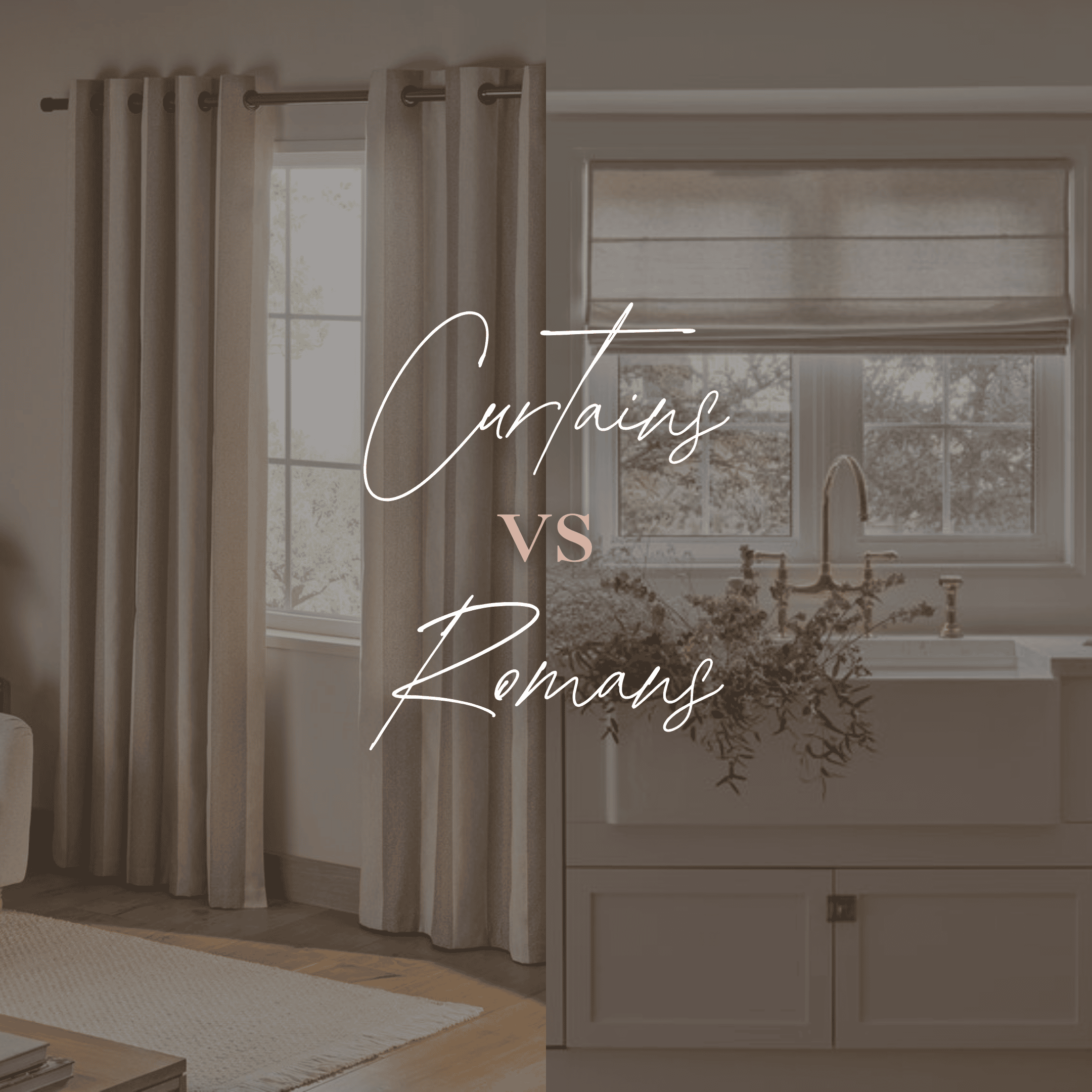
Curtains are a classic choice that brings softness and movement into a room. Hung from a track or pole, and available in Eyelet, Wave, Pinch Pleat (double or triple), and Pencil Pleat headings, they frame the window and extend beyond it, making them particularly well suited to larger windows and doors. One of their greatest strengths is versatility: curtains work equally well in traditional, contemporary, and all types of interiors depending on fabric choice and heading style.
A key advantage of curtains is the range of lining options available, allowing you to tailor both appearance and performance. Unlined curtains, our sheer curtains, are light and airy - perfect for creating a soft, natural look, allowing gentle daylight to filter through and ideal for spaces where a lighter ambiance is desired. Poly cotton lining is a practical all-round option, which adds body and structure to your curtains, offering a balanced level of light control and insulation. For a more luxurious finish, Premium satin lining enhances the drape and feel of your curtains. Its subtle sheen adds a premium finish while providing superior protection and light control. For rooms where light control is essential, blackout lining is the most effective choice, significantly reducing incoming light and improving thermal performance. All of our lining types are available in white or ivory.
Curtains are easy to adjust throughout the day, allowing you to quickly control light and privacy. Aesthetically, they add warmth and texture, making rooms feel more inviting and balanced, particularly where ceilings are high or walls feel bare.
Roman Blinds: Structure, Simplicity, and Precision
Roman blinds offer a more tailored and structured alternative. When lowered, they sit flat against the window; when raised, they fold into neat pleats. This clean, streamlined appearance makes Roman blinds especially popular in modern interiors or rooms where space is limited.
One of the key advantages of Roman blinds is their compact design. Because they sit closer to the window, they do not intrude into the room, making them ideal for kitchens, bathrooms, offices, and smaller living spaces. They are also an excellent choice where radiators, furniture, or worktops sit beneath the window.
Roman blinds’ precise fit makes them particularly effective when installed inside a window recess, creating a crisp, architectural look. While they may allow slightly more light around the edges than curtains, careful measuring and fitting can significantly reduce this.
Key Differences Between Curtains and Romans
The most noticeable difference lies in their visual impact. Curtains create softness and drama, while Roman blinds deliver structure and restraint. Curtains tend to become a dominant design feature, whereas Roman blinds blend more subtly into the overall scheme.
Functionally, curtains offer more flexibility for large or unusually shaped windows. Roman blinds, on the other hand, excel in spaces where a minimalist finish is preferred or where practical considerations limit the use of curtains.
What Curtains and Roman Blinds Have in Common
Despite their differences, curtains and Roman blinds share several key qualities. Both are available in our wide range of fabrics, allowing you to coordinate them seamlessly with your home interior. Both options can enhance privacy, control light, and improve comfort when properly specified and fitted.
Each can also be customised to suit specific needs due to our various lining types- whether that’s improved insulation, reduced glare, or enhanced room darkening. When professionally made, both curtains and Roman blinds are durable, timeless, and add value to your home.
Which Should You Choose?
The choice between curtains and Roman blinds ultimately comes down to how you use the space and the atmosphere you want to create. Curtains are ideal for rooms where warmth, softness, and flexibility are key. Roman blinds suit spaces that benefit from a clean, tailored look and efficient use of space.
Many homes successfully combine both, using Roman blinds for everyday control and curtains for added style and presence. Whichever you choose, understanding their differences and shared strengths will help you make a confident, long-lasting decision!