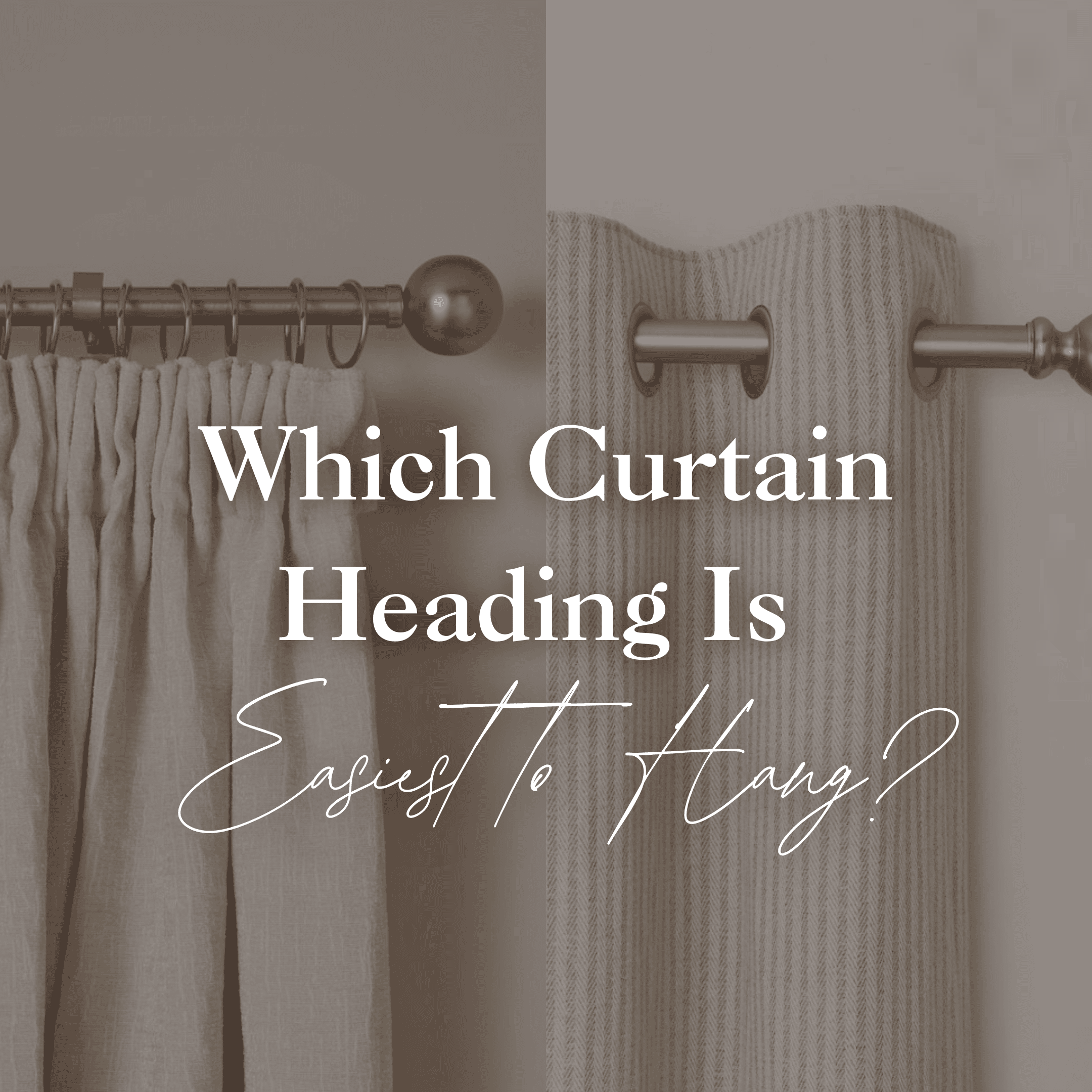
In this blog, we will break down the different curtain heading types we offer and reveal which one is truly the easiest to hang.
Eyelet Curtains: The Easiest to Hang
If convenience is your top priority, Eyelet curtains are the clear winner. Designed with large metal eyelets fitted into the fabric, they simply slide onto a curtain pole- no hooks or complicated tape systems. They open and close effortlessly, making them ideal for everyday use.
Why they’re so easy:
-
No additional hardware needed (beyond a standard pole).
-
Curtains glide effortlessly when opening and closing.
-
Quick to install - perfect for busy homes or first-time installers.
If you're looking for a stylish option that offers both simplicity and a modern finish, eyelet curtains are the ideal choice. With their clean lines, smooth operation, and versatile design, they’re ideal for both functional and decorative use in any room.
Pinch Pleat Curtains: Elegant, Easy and Versatile
Double or Triple Pinch pleat curtains offer a tailored, elegant finish with two or three sewn pleats spaced between flat fabric panels. This bespoke heading style is custom-made to perfectly fit individual windows, ensuring a precise and polished look. Pinch Pleat curtains are easy to install.
Suitable for:
-
Curtain poles
-
Curtain tracks
To hang Pinch Pleat curtains, there's no gathering required- simply place a curtain hook into the back of each pleat, and they’re ready to go. The result is beautifully tailored drapes achieved in one easy installation!
Pencil Pleat Curtains: Sophisticated and Versatile
Pencil pleat curtains offer a classic, gathered finish with adjustable fullness, allowing you to choose how tailored or voluminous you want your curtains to appear. This makes it easy to customise the look to suit your space. Before hanging, simply pull the cords to create the desired pleats.
Where they can be installed:
-
A curtain pole
-
A curtain track
To install, you need to place the curtain hooks at even spaces along the heading. You will need a curtain hook for each ring or glider on your pole or track. The versatility is a big advantage, but the extra steps mean they take slightly longer to hang compared to other heading types.
Wave Curtains: Smooth and Stylish, with Specific Requirements
For a sleek, contemporary look, wave curtains are a popular choice, ideal for modern spaces thanks to their uncluttered, elegant appearance. Their even, flowing folds create a minimalist aesthetic - but they must be used with a compatible wave track.
Keep in mind:
-
They cannot be hung on a standard pole.
-
They must be installed on a compatible wave track.
Once installed on the proper track, they operate smoothly, but the setup requires more planning!
Wave curtains are installed by fitting your brackets—either face-fix or top-fix—then securing them to the wall and spacing them evenly, with end brackets placed at least 10cm in from each side. Once the track is in place, hanging the curtains is easy: the zinc-plated hooks come pre-attached, so you just slot them into the gliders to create those smooth, even waves while keeping the lining neatly hidden from view.
So, Which Curtain Heading Should You Choose?
-
For the easiest installation: Choose eyelet curtains.
-
For versatality: Pencil pleat or pinch pleat work on both poles and tracks.
-
For a modern, architectural look: Wave curtains are perfect — just make sure you have the right track.
Whether you’re updating one room or giving your whole home a refresh, selecting the right curtain heading can make the installation process far easier. If convenience is what you’re after, eyelet curtains remain the clear winner. For more help, all of our fitting and measuring guides are available on our website and YouTube channel.