When choosing curtains, most people focus on fabric, colour, and heading style- but there’s another crucial detail that can make or break the final look: curtain fullness.
Understanding fullness will help you achieve curtains that look beautifully proportioned, drape correctly, and elevate your space rather than falling flat. In this blog, we’ll explain what curtain fullness is, why it matters, and what fullness each heading type requires.
What Is Curtain Fullness?
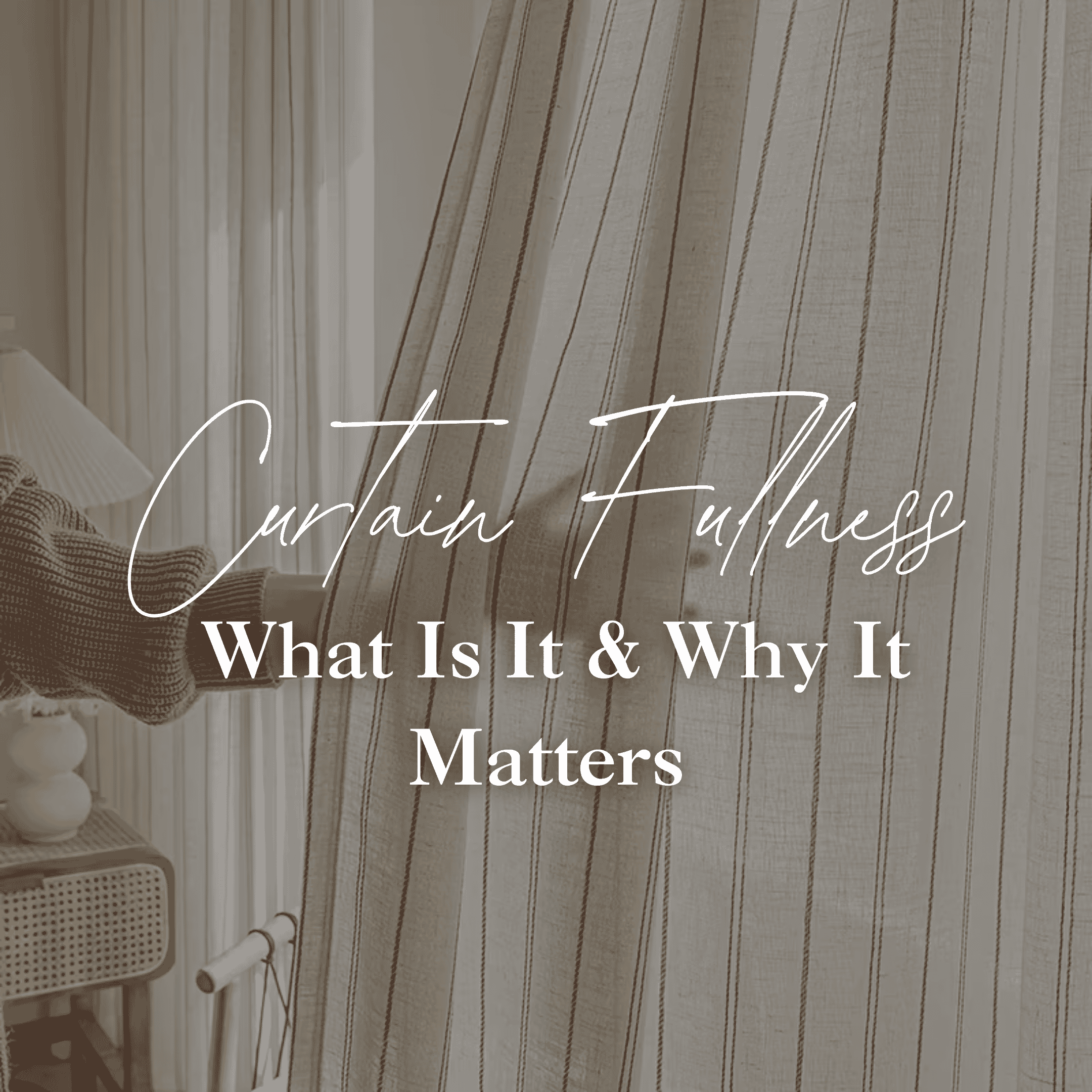
Curtain fullness refers to how much fabric is used in relation to the width of your curtain track or pole. It’s usually expressed as a ratio, such as 2x, 2.5x, or 3x fullness.
The higher the fullness, the more folds and volume your curtains will have when they’re closed and even when they’re open.
Fullness by Heading Type
Eyelet Curtains
-
A fullness of 1.5 to 2 times the curtain width is recommended for the best drape. This allows for soft, even waves without overcrowding the pole. Too much fullness can make eyelet curtains look bulky.
Pinch Pleat Curtains
-
Pinch pleat styles require 2.5 times fullness for a structured, elegant look. Extra fabric enhances the depth of the pleats and adds sophistication.
Pencil Pleat Curtains
-
Pencil pleat curtains are highly versatile and can be adjusted to different levels of fullness. They work best with double fullness, delivering soft, even pleats for a beautifully balanced look.
Wave Curtains
-
Wave curtains are designed to create smooth, uniform folds- for the best appearance and movement, we recommend using 2.5 times fullness with a compatible wave track system.
Choosing the Right Fullness for Your Space
When deciding on fullness, consider the following factors:
Room Style
Formal spaces such as dining rooms and master bedrooms often suit higher fullness for a more luxurious feel.
Fabric Weight
Heavier fabrics, such as velvet or lined curtains, naturally create volume, so they may not need as much fullness as lighter fabrics like linen or sheer materials.
Window Size
Larger windows generally benefit from greater fullness to maintain balance and proportion, while smaller windows can look overwhelmed by too much fabric.
Budget Considerations
Higher fullness requires more fabric, which can increase cost. However, investing in the right fullness often makes a difference in the overall appearance.
Final Thoughts
Curtain fullness is one of those details that’s easy to overlook, but once you understand it, it becomes clear how important it is. The right fullness enhances the drape, improves functionality, and gives your curtains a polished, high-quality finish that transforms your home.
If you’re unsure which fullness is right for your curtains, following a professional measuring guide or seeking advice can help you achieve the perfect result. With the right balance of fabric and style, your curtains won’t just frame your windows- they’ll define your room!