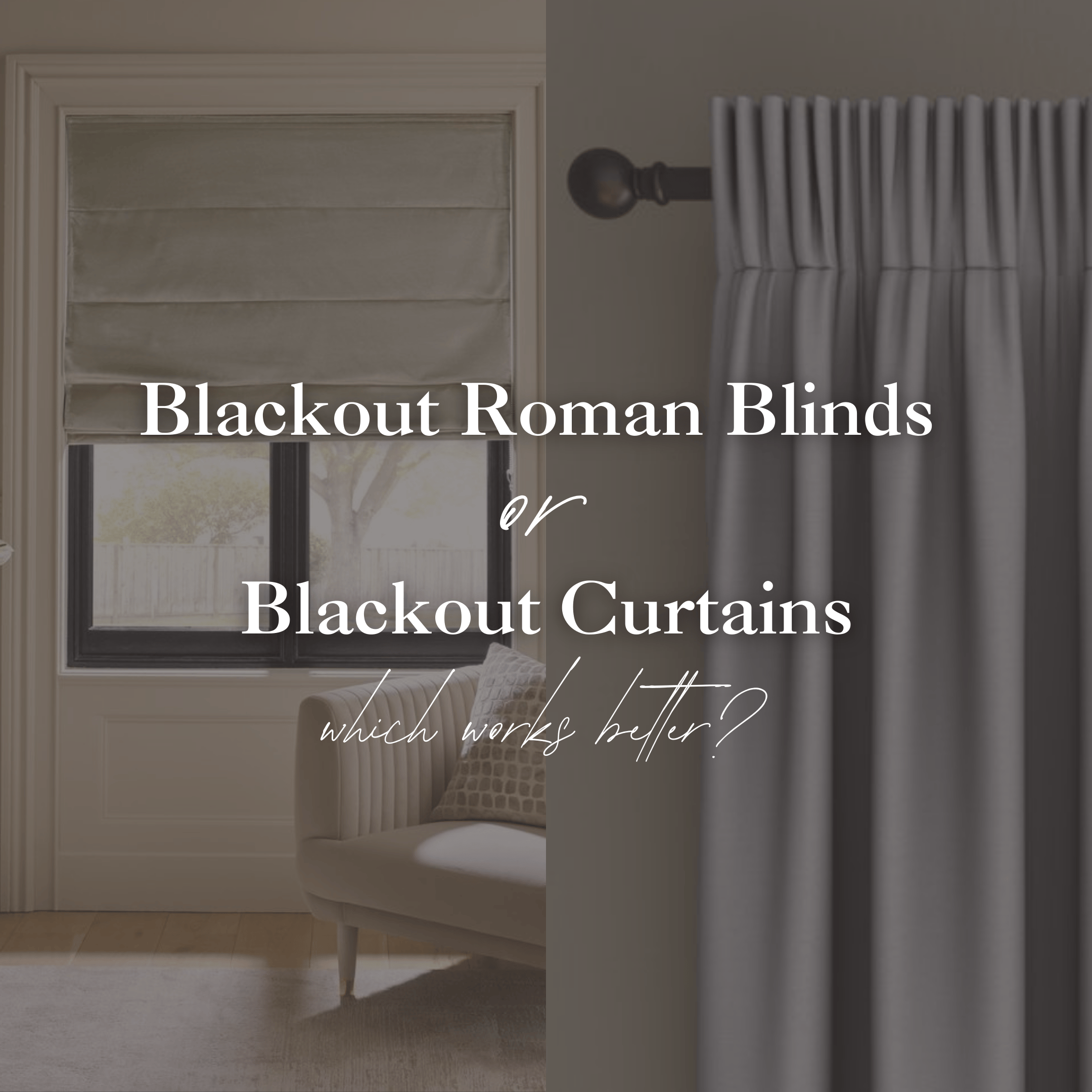
Achieving effective light control is a key consideration when choosing your new curtains or Roman blinds- especially for bedrooms, nurseries, home offices, and living spaces where comfort and privacy matter.
Two of the most popular solutions are blackout Roman blinds and blackout curtains. While both are designed to reduce incoming light, their construction, performance, and overall impact on a room can differ. Understanding these differences will help you choose the option that best suits your home and lifestyle.
Blackout Curtains: Reliable and Versatile
Blackout curtains are a timeless choice and remain one of the most effective ways to block out light. Both stylish and functional- they add a polished finish to any room while delivering real everyday benefits.
We offer blackout lining for all heading types (apart from sheers) meaning you can enjoy excellent light control without compromising on style. Whether you prefer pencil pleat, eyelet, pinch pleat, or wave headings, blackout lining is integrated seamlessly to ensure consistent performance.
Thanks to their fullness and typical floor-length drop, curtains naturally cover a larger surface area than blinds. This helps minimise light leakage around the sides and top of the window, particularly when paired with a well-fitted track or pole. As a result, blackout curtains are often the preferred option for people who need near-total darkness, such as night-shift workers or parents of young children.
Beyond light control, blackout curtains also offer thermal benefits. Blackout lining blocks sunlight, reduces noise, and enhances insulation- reducing heat loss in winter and limiting heat gain in summer. Aesthetically, curtains add softness and movement to a room, making them ideal for traditional interiors or larger spaces where a layered, luxurious look is desired.
Blackout Roman Blinds: Tailored and Contemporary
Blackout Roman blinds offer a more streamlined and structured alternative. When raised, they stack neatly at the top of the window, and when lowered, they create clean, elegant folds. This makes them particularly appealing for modern interiors or rooms where space is limited.
We offer three specialist lining options for Roman blinds, allowing you to tailor performance to your specific needs:
-
Blackout lining provides excellent light control, significantly reducing incoming daylight and improving privacy.
-
Bonded SuperThermal lining focuses on insulation, helping regulate temperature while softly filtering light rather than fully blocking it.
-
Bonded blackout SuperThermal lining is the most advanced option, combining maximum light reduction with superior thermal efficiency, making it ideal for bedrooms and energy-conscious homes.
Roman blinds sit closer to the window than curtains, which can result in small gaps around the edges. However, with precise measuring and fitting, especially inside a recess, this can be minimised. Their neat appearance makes them a great choice for kitchens, offices, and living spaces where a clean, uncluttered look is preferred.
Light Control: Which Is Better?
In terms of pure light-blocking ability, blackout curtains often have the edge due to their size and overlap. The extra fabric helps prevent light seepage, especially on larger windows or doors. That said, Roman blinds with bonded blackout superthermal lining come very close, offering impressive darkness with the added benefit of insulation in a more compact form.
Thermal Performance and Energy Efficiency
Both options can improve energy efficiency, but they do so slightly differently. Blackout curtain lining adds an insulating layer that helps retain heat and reduce draughts. Roman blinds with bonded superthermal or bonded blackout superthermal lining are specifically engineered to enhance thermal performance, making them particularly effective in rooms with large or exposed windows.
Style and Practicality
Curtains tend to suit rooms where softness and texture are important, while Roman blinds excel in spaces that benefit from a tailored finish. Curtains are easy to adjust throughout the day, whereas Roman blinds offer a tidy solution that doesn’t intrude into the room when raised.
The Verdict
So, which works better? If maximum light blocking, added softness, and versatility are your priorities, blackout curtains are an excellent choice. If you prefer a sleek aesthetic with flexible lining options that balance light control and thermal performance, blackout Roman blinds may be the better fit. Ultimately, the best solution depends on your room, design preferences, and how you use the space. Many homes even benefit from combining both for the best of all worlds!